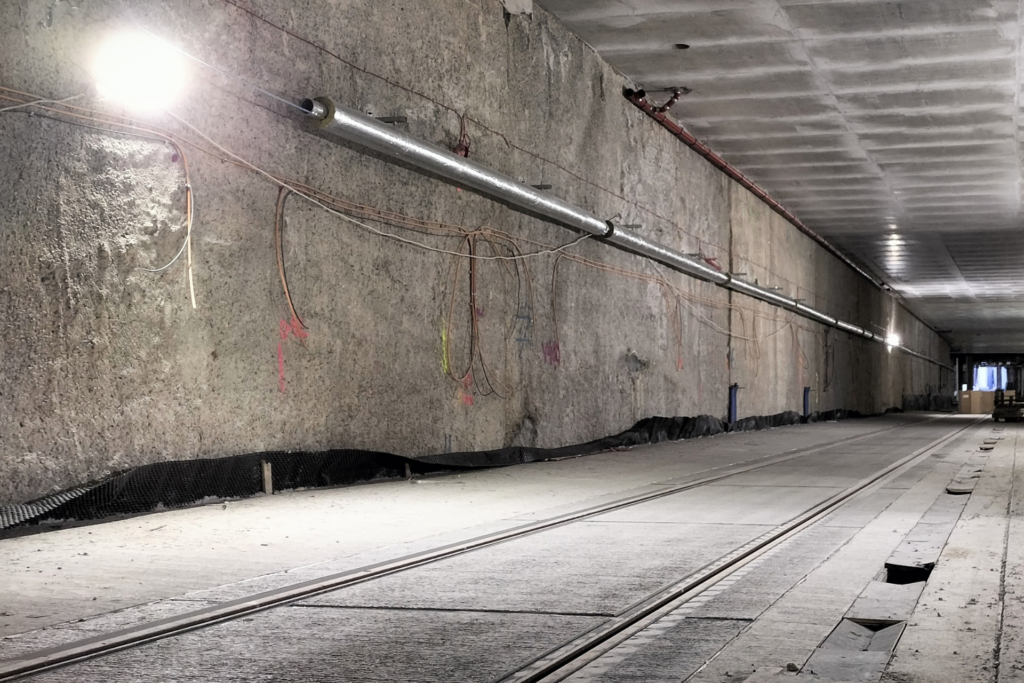

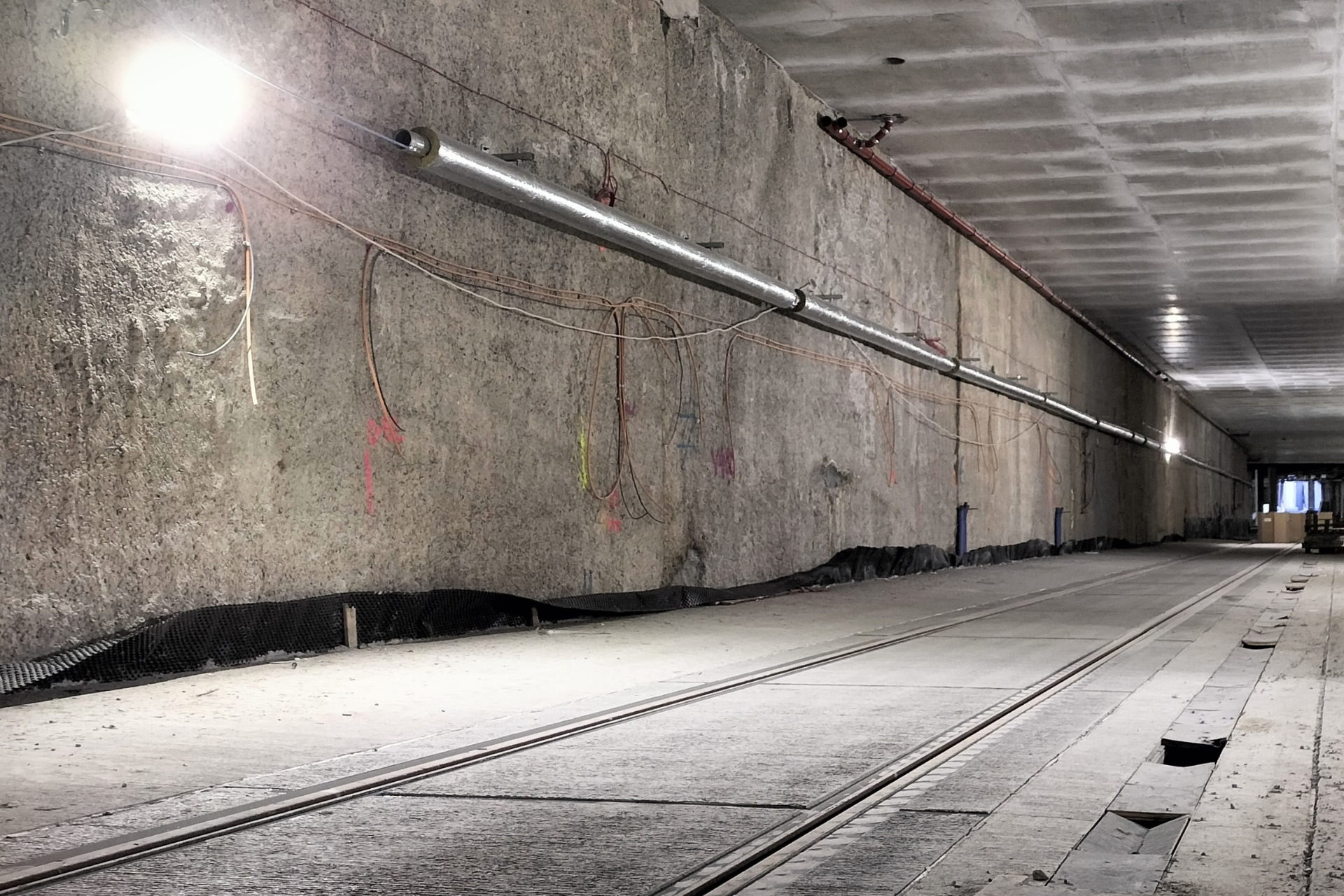
The last liters of concrete have been poured, and the tunnel structure to Mistrzejowice is now complete!
We have reached another milestone that brings us closer to delivering the project. The construction of the pumping station and the pouring of the base slab have been completed—we are on the home stretch!
10,000 cubic meters of concrete
“The tunnel is divided into eight sections, which we worked on in stages. To create the tunnel floor—the base slab—along its entire length, we used as much as 10,000 cubic meters of concrete,” says Piotr Szumowicz, Tunnel Works Manager on the KST-IV project. To give a sense of scale, that’s roughly the amount that would fill four Olympic-sized swimming pools.
To begin work on the final section of the base slab, we had to carry out a series of important earthworks and structural operations. First, we excavated the area and leveled the ground. Then we poured the first layer of concrete (blinding concrete), sealed all connections with the tunnel walls, and installed a special waterproof membrane. Finally, we reinforced the structure with steel rebar and poured the final layer of concrete.
On the very last section, we poured 270 cubic meters of concrete, thus completing the construction of the base slab. This marks the final stage of building the tunnel’s structural framework, allowing us to connect the two previously completed sections of track into one continuous line. By the end of March, the track throughout the entire tunnel area will be completed!
The lowest point of the tunnel
At the beginning of the year, we also completed the construction of the stormwater pumping station, located at the lowest point of the tunnel—up to 20 meters underground!
This element of infrastructure can hold over 300,000 liters of water and is crucial for the proper functioning of the entire tunnel structure. Rainwater, groundwater, and even moisture condensing on the walls naturally flow downward and collect at the lowest point. Unlike a road at ground level, water cannot drain by gravity from a tunnel located several meters below the surface, as it is surrounded by soil. The accumulation of water would pose a serious risk to the entire infrastructure, potentially causing failures and disruptions to tram operations.
The pumping station collects water from the entire facility and temporarily stores it in a special chamber. Pumps are then automatically activated, transferring the water into the municipal drainage system. This ensures efficient and safe operation of the tunnel regardless of weather conditions, as well as a comfortable journey for passengers.